PROGRAMMED MOVEMENT · 2–8 UNITS · RALLY / DEATHMATCH
QUALITYFORM CC-7
This seal is your assurance that Plant 7 has inspected this product and that it meets the standards of excellence in workmanship, reliability and entertainment value that were in force in 2049. Always look for this seal when buying games and accessories to ensure complete compatibility with your Clanker.
Thank you for selecting Clanker Calamity™ for the Plant 7 Industrial Automation System.
Precautions
- Accept five instructions per Shift, or one per Cycle. The link will not carry more. Bandwidth is a virtue.
- Commit your instructions before Plant 7 executes them. There is no cancel button.
- Assume all machinery is active until proven otherwise. Proven otherwise is not a state the machinery has been observed in.
- In the event of fire, the flame throwers are operating as designed. Please do not idle in the flames.
- Dents are not covered by the warranty. Most things are not covered by the warranty.
© 2049 PLANT 7 INDUSTRIAL AUTOMATION DIVISION · DECOMMISSIONED 2049 · STILL RUNNING
CONTENTS
- 1. The Job3
- 2. The Game Screen4
- 3. A Shift, Start to Finish5
- 4. Live: One Card at a Time8
- 5. The Three Switches the Host Sets10
- 6. The Deck11
- 7. Your Unit17
- 8. Plant Key19
- 9. When It Goes Wrong25
- 10. Who You Are Up Against27
- 11. Playing with Other People28
- 12. Controls · Advanced Operations31
- 13. Pointers and Trade Secrets33
- 14. Glossary34
- Appendix: Notices37
- Appendix: Developer’s Note38
- Appendix: Shift Record39
You are a robot in Plant 7, decommissioned in 2049. Nobody told Plant 7.
PUNCH THE CLOCKS.
IN ORDER.
Punch the numbered Punch Clocks in order. When you punch the last one, the match is yours. There is no finish line and no exit. The clocks are the objective.
You punch a clock by standing on it when a slot/cycle ends. There are two programming styles, and the host picks one: in 5-SLOT the check happens at the end of each of the five slots; in LIVE, at the end of every cycle. In either programming style, the plant takes its turn before the clock is checked. A belt, a ram or any other machine can move you off the clock before the check, and then the punch does not count.
Only the clock you need next is lit and ringed on the floor. Each player sees their own next clock lit, so two players may see different clocks lit at once.
Punch the clocks in order. Belts, rams and turntables will move you whether or not you asked; this is called workflow. The host may switch on Night Shift. Light attracts bugs.
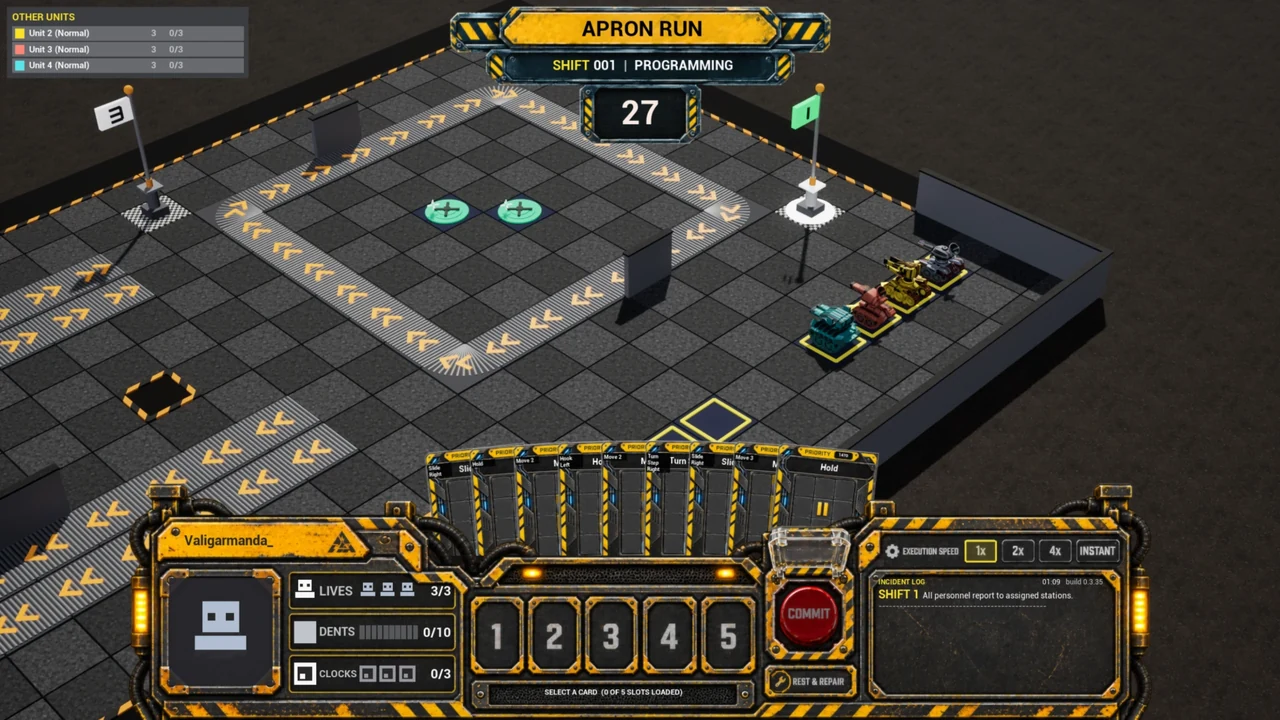
The screen below shows a 5-SLOT match. LIVE uses the same floor and status information with a simplified card interface described in Chapter 4.
 1
2
3
4
5
6
7
8
1
2
3
4
5
6
7
8
- OTHER UNITS. Each rival's color, personality, Chassis left and clocks punched.
- SHIFT PLATE. Route name, shift number, phase and the countdown.
- THE FLOOR. The route and every unit on it.
- YOUR UNIT. Name, portrait, lives (remaining Chassis), Dents and clocks.
- YOUR HAND. This shift's cards, each with its priority.
- PROGRAM SLOTS 1–5. Your program: five Slots to load, in order.
- COMMIT. Locks the program in. REST & REPAIR sits beneath it.
- INCIDENT LOG. What just happened, with EXECUTION SPEED above it.
The host picks the programming style before play. This chapter describes 5-SLOT; LIVE is chapter 4.
- 1DEAL
You are dealt your cards. The first two Dents are free; past that, every Dent means one card fewer.
- 2PROGRAM
Load five cards into slots 1 to 5. That is your whole plan for the shift, committed blind.
- 3RUN
Everyone's program runs at once, one slot at a time. Within a slot, the LOWER priority number resolves first.
- 4PLANT
Each slot resolves in the order below. Service Pads repair at the end of every slot.
- 5CLOCK OUT
Rests end, scrapped units come back, and the next shift is dealt.
A Slot is one of the five places in your 5-SLOT program, and also the interval in which that position resolves. Slot 3 in your program executes during Slot 3 of the Shift. LIVE has no program Slots. Instead, each card is played during a Cycle. For plant timing, a LIVE Cycle is equivalent to a 5-SLOT Slot. When this booklet says slot/cycle, the rule applies in either programming style.
The plant is scheduled by slot/cycle. A ram marked 1/3/5 fires after Slots 1, 3 and 5 in 5-SLOT. In LIVE it fires after Cycles 1, 3 and 5, then the five-cycle schedule begins again.
Rally
Punch every clock in order, from the first to the last. The first unit to punch the final clock wins the match for itself; everyone else loses. A rally that reaches the match limit is a draw. Being shoved costs no damage.
Deathmatch
No clocks; the last unit left wins. Three rules are deathmatch's alone: a shove that moves nobody Dents the blocked unit, a scrapped unit reboots at the quietest starting point, and the match limit goes to the unit in the best shape.
The floor and the mode
Each floor is made for one mode, and the host's Game Mode row says which mode the match will use. A rally floor hosted as deathmatch is not changed, but its clocks are not shown; those squares are plain concrete. A deathmatch floor has no clocks and plays only as deathmatch. Deathmatch offers every floor; rally hides the deathmatch floors.
You start on a starting point, a square the route's author placed. The number of Starting Points determines how many units the route supports, from two to eight.
Punching the final clock ends the match in your favor. If two units punch it during the same slot/cycle, the faster card (the LOWER number) wins; if neither moved onto the checkpoint under its own power and both were carried there by the plant, both win.
Route completed
Somebody punched the final clock after every earlier one, in order.
Shared victory
Two or more units punched it during the same slot/cycle, none having moved onto the checkpoint under its own power. That can happen only where the final checkpoint is wider than one tile: a Punch Clock with Clock Tiles beside it (chapter 8).
Last unit standing
Everybody else was scrapped out. The survivor wins without finishing. In deathmatch this is the ordinary win.
All eliminated
Nobody is left in service: a draw.
Match limit
In 5-SLOT, if nobody has finished after 300 Shifts, the Match reaches its limit. In Rally it is a draw. In Deathmatch, the unit in the best shape wins: most Chassis remaining, then fewest Dents. An exact tie is shared. In LIVE the limit is 1,500 Cycles, the plant's five-cycle schedule run 300 times; the same results apply.
Match setup's Programming Style row chooses 5-SLOT or LIVE. LIVE plays on every floor in either mode and keeps the plant, the deck and the clocks; what changes is how you play your cards: one per cycle, with no shifts, until the match ends.
After each Cycle the plant takes its turn exactly as it does after a Slot in 5-SLOT. A ram marked 1/3/5 fires after the first, third and fifth Cycles, then its five-Cycle schedule begins again. A clock is checked at the end of every Cycle. Each Cycle, everybody plays one card at once, without seeing anyone else's choice.
Your hand
Nine cards are dealt fresh before every cycle. A card you played two cycles ago can come around again.
The window
The window is twenty seconds, which the host can change. Run out of time and a card from your hand is played for you, at random.
Playing a card
Pick a card in the hand, or drag it onto the floor. The card cursor only highlights; it plays nothing. There is no COMMIT and no REST. Once a card is played, the rest of your hand disappears; the played card stays alone at bottom center, saying PLAYED, until the next hand is dealt.
The order
The lowest number goes first, exactly as in 5-SLOT. Choosing a card is choosing when you move.
Dents deal cards instead of jamming slots
LIVE has no slots to jam and no free Dents. Every Dent, from the first, swaps a command card in your hand for a Dent card, so the hand is always nine cards. Dents taken during a cycle appear in the next hand. Chapter 6 lists the Dent cards; each runs just ahead of the clean card it imitates.
At 10 Dents
You are scrapped and sit out three cycles, dealt no hand, and the line at the bottom reads REBOOTING... PLEASE WAIT... (CYCLE n/3). After the third Cycle you come back with no Dents, where a 5-SLOT reboot would put you (chapter 9). Scrapping yourself from the escape menu (chapter 9) costs what any scrapping does, a Chassis and three cycles out, starting as that cycle's window closes.
There is no Rest
Healing is a place. A Service Pad repairs you at the end of every cycle you finish on it, and a scrapping clears every Dent.
What the screen drops
The program panel, top-bar instructions and move-preview dots are removed. The shift plate reads PLANT 7 | LIVE under the route name, with no number, and nothing on screen counts the cycles. While your unit plays, your hand is all there is at the bottom of the screen. The ending reads MATCH COMPLETE, in either programming style.
Match setup's last row is three switches: Random Starts, Night Shift and Move Preview. They are the host's, not yours. They are settled before play begins and apply to every unit in the match, and anyone who joins plays under them.
Random Starts
This shuffles who gets which starting point. When it is off, seats take the floor's starting points in order. When it is on, seats are drawn from every starting point the floor has rather than the first few, so a two-unit match on an eight-seat floor can begin anywhere on it. Either way the draw is made once for the match and is the same for everybody.
Night Shift
This turns the plant's lights off, and the floor is lit by what is on it. Every unit gets a headlamp throwing a short pool on the floor a few squares ahead, and a small halo overhead. Whatever was already its own light still glows: a beam in flight, a magnetic square's chevrons, or a square the floor lights on its own.
Move Preview
This draws your program on the floor while you build it: dots along the route your five cards would take, across stories if it takes a ramp. It is yours alone; nobody sees where you intend to go. It shows only while you are programming and clears as the shift runs. It does nothing in LIVE.
The deck is 154 cards and is shared by everyone. In 5-SLOT it is reshuffled every Shift. In LIVE, the full deck is reshuffled before every Cycle, then nine cards are dealt. Each card's priority number is its speed: the LOWER resolves first.
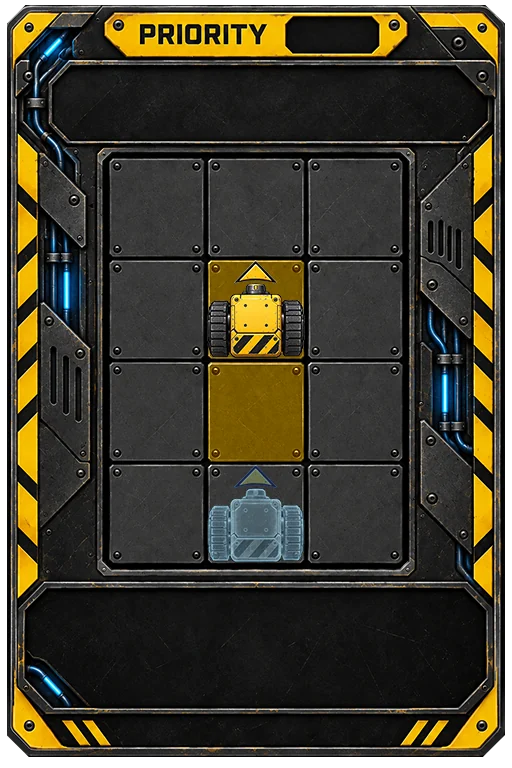 240Move 2Move forward 2 tiles.
1
2
3
4
240Move 2Move forward 2 tiles.
1
2
3
4
- PRIORITY. The card’s speed. The lower number resolves first.
- NAME. The command.
- THE MOVE. The faded unit is you before the card, the solid unit is you after it, and the gold tiles are the ones the card uses. A bar across the grid means you do not move: the top half only shows which way you end up turned.
- WHAT IT DOES. The command in words, as the game states it.
Every card the plant can deal you is on the next three pages. The plant has already read them.
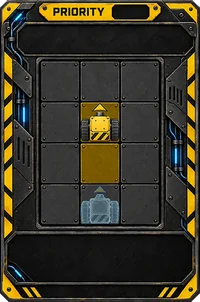
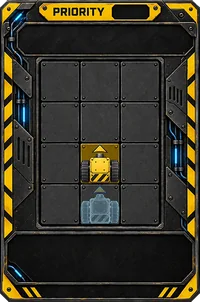
Forward that many tiles.
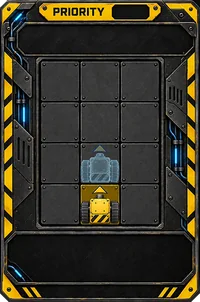
One tile backward, without turning.
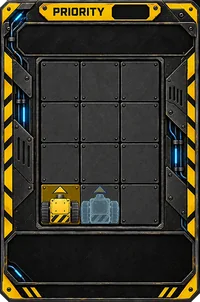
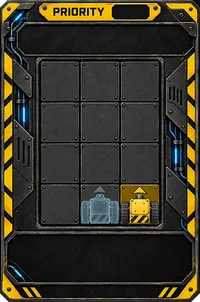
One tile left or right, without turning.

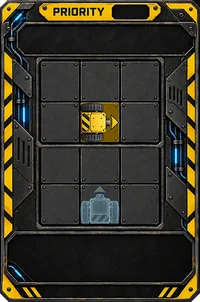
Turn 90°.

Turn 180° in place.
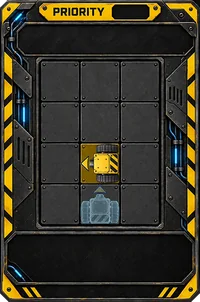
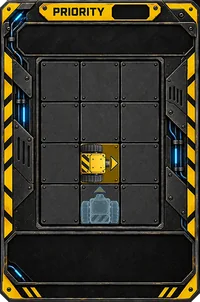
Forward one tile, then turn 90°; a wall stops the move, not the turn.
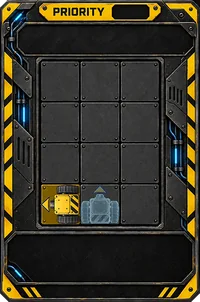

Turn 90°, then one tile that way.
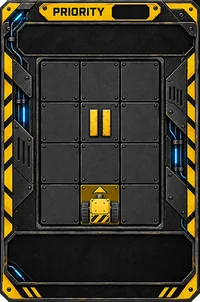
Nothing: no movement, no turn.

Stay where you are, and nothing can shove you for the whole slot/cycle. A belt still carries you.
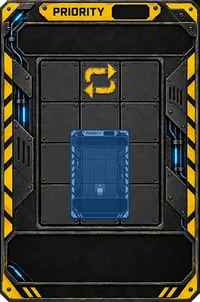
Your previous card again, exactly as played. With nothing before it, it holds.

The last card any unit played, your own included. 5-SLOT: earlier in the current Shift. LIVE: at any point in the Match. If that card was a Mimic, or there is none, it Holds.
Plant 7 CommendationsSteam Achievements


In LIVE a unit is dealt one Dent card per Dent it carries, in every fresh hand, from a separate deck. No 5-SLOT match deals them.
A Dent card may have more than one possible outcome. When it does, it does not decide which until it resolves. The card shows its possible outcomes, but nothing shows which one you will get, and the roll is never announced. You find out by watching it move.
A damaged Hook or Turn Step always goes the way its name says; only the order of move and turn is left to chance.
A damaged card resolves before the clean card it imitates. A clean card prints a higher number in LIVE than in 5-SLOT, but clean cards still resolve in the same order.
Plant 7 CommendationsSteam Achievements

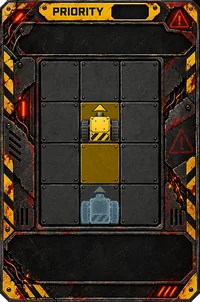
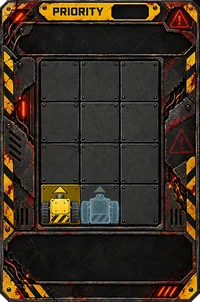
Dealt in LIVE, one for each Dent you carry, in place of a command card. Each shows the outcomes it might have; the roll is never announced.

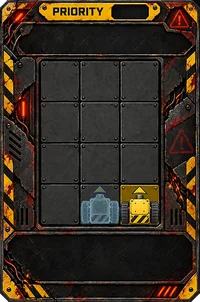
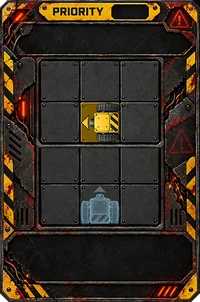
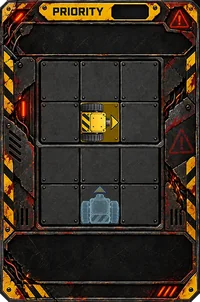

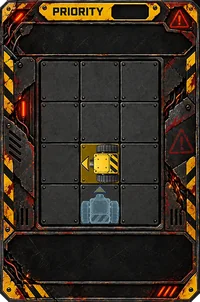
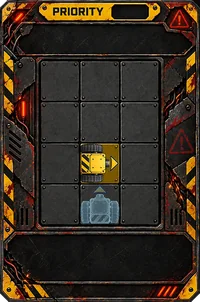

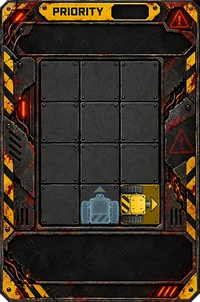

Holding
A held unit resolves after nearly everybody. A flame thrower and live wires catch you every slot/cycle you stay.
Hook and Turn Step
The same two actions in the opposite order: a Hook ends one tile ahead, turned the new way; a Turn Step ends one tile to the side, pointing that way.
Repeat and Mimic
The incident log says what each played. Repeat: in 5-SLOT, Slot 1 has nothing to repeat; in LIVE it uses your last card even after the five-Cycle schedule restarts; being scrapped clears your own Repeat. Mimic: any card played before yours counts, including one of your own from an earlier Slot/Cycle, so the newest card wins even when it is yours; of two Mimics in one Slot/Cycle the second Holds; and a scrapped unit's last card can still be copied.
The host's deck
From the CUSTOMIZE DECK row on Match setup, the host can remove entire card types, change how frequently the remaining cards appear, or choose a preset deck: Everything, Movement Only, No Utility, or Oops! All Move 3.
A custom deck keeps the command cards in their usual order, is never smaller than 80 cards, and renumbers the cards to fit what is left.
ONE TILE.
ONE FRONT.
You occupy exactly one tile, and no two units ever share one. You point one way at a time: the arrow on your unit is your front, and your moves, your slides and your laser are all measured from it rather than from the floor.
Shoving
If you move into an occupied tile, you shove the unit standing there one tile in the direction you were going, and take its tile. Every forward move, back up and slide can shove.
Shoves can chain, whether caused by a unit or a ram: the entire line moves one tile, with no limit. An obstruction anywhere in the chain blocks the entire push, and nobody moves, including you; the rest of that card is lost.
A shove never turns you, and your remaining program runs from where you land. A multi-tile move shoves once per tile, and a later tile can still be blocked even if the earlier shoves succeeded.
Every unit fires an inspection laser forward once per slot/cycle, automatically, dealing one Dent to the first unit in front of it. You do not aim it and you cannot switch it off. It fires the way you face.
It fires after everything has finished moving, at whoever is in front of you when the dust settles. All the lasers fire at once, and a unit scrapped by a beam still gets its own shot off.
It turns at a mirror exactly as a welding laser does, and a Dent it deals after the turn still counts as yours.
Shoving, in deathmatch
A shove that moves nobody Dents the unit that could not move. You do not advance and they do not move, exactly as in a rally, but the unit you shoved takes one Dent for being crushed against whatever was behind it.
Anything that keeps the shoved unit from moving counts: a wall, a shut gate, a bouncer, or a Brake Plate or Magnetic Tile it is standing on. A ram slamming you into a wall costs nothing, in either mode. In a chain shove, only the unit you shoved directly takes the Dent, not the ones behind it.
A hazard is a tile. Nothing on the floor is random: a machine that fires on a schedule, or that can be open or shut, up or down, shows on the floor how it will act.
General

Ordinary concrete: what a card moves you between. Nothing on it acts.

The edge of the floor. Crossing it scraps you immediately, just like entering a shaft.
Belts

Carries a unit one tile after every slot/cycle. A curved belt turns only a unit it carried into the curve; walk onto it and you are not turned. It never shoves.


Carries two tiles per slot/cycle, before the ordinary belts. It carries you into a shaft without hesitation.


A belt with blue chevrons. The carry is free; moving off it under your own power costs one tile of that card's travel, once per card.

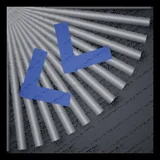

The magnetic kind of fast belt. A Move 3 against it nets no squares.


Hazards

Anything entering is scrapped immediately, mid-move. The rest of that card is abandoned.
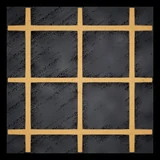
Bare copper in the floor. One Dent for ending a slot/cycle on it, and another for every slot/cycle you stay. Crossing it costs nothing.

A shaft while its plate is pressed, and a shaft in every way. If it opens beneath you, you fall in before your next card, whatever it is.



Turns a unit on it the way its marks say: right, left, right round, or alternating from one slot/cycle to the next.



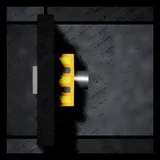
Fires on the numbered slots/cycles marked on it and shoves whatever is on it one tile away from its wall.
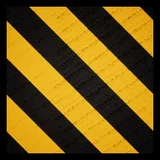
Comes down on the numbered slots/cycles marked on it. Anything beneath takes 2 Dents; a unit already carrying six or more Dents is scrapped outright.
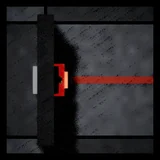
Wall-mounted. It fires once per slot/cycle after everything has moved, dealing one Dent per beam, from 1 to 5 beams. Only the first unit in the path is hit.

Fires once per slot/cycle, after everything has moved. One Dent to everyone in its run; a unit is not cover. Scorch marks are its range.

A platform that rises for one slot/cycle and drops for the next. While it is up, the square under it is floor you can stand on; when it drops, it crushes whatever is there.

The same platform with nothing beneath the deck. While the platform is up, the square under it is a hole. Both lifts start the Match lowered or raised; Shifts do not reset them.

Walls

A beam that reaches a mirror turns 90°. Inspection lasers reflect the same way as welding lasers. Nothing stands on one.

A mirror with a point. A beam striking the point splits into two beams, one leaving from each side.
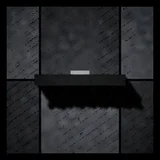
Blocks movement across its edge both ways, and beams. Walking into one stops you, without damage.
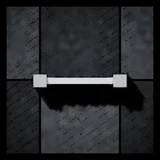
A wall that stands open while its plate is pressed; shut, it stops movement, shoves and beams. Some are open until the plate is pressed.
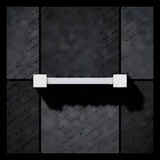
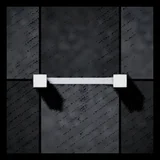
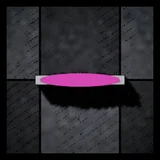
Walk into it and you go back one square; the rest of your card carries on. Shoved into it, nobody moves.
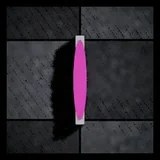
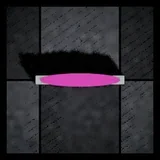

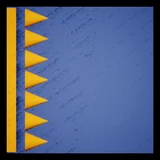
Passable one way, solid the other, for units, shoves and beams. Floor arrows point the open way.


Special

Where a unit begins the match. The number of Starting Points determines how many units the route supports, from two to eight.
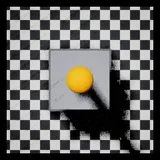
Ending a slot/cycle on the one you are due for punches it and moves your reboot point to it. The wrong one does nothing.

A Clock Tile beside a Punch Clock extends that clock into a wider checkpoint. Punching it moves your reboot point to the clock.

Active while a unit stands on it. It is read at the end of the slot/cycle and affects the next one; a unit that reboots onto it is holding it. Its color matches the gate or trapdoor it controls.

Repairs at the end of every slot/cycle you end on it, one Dent per jack hovering over the pad, and nothing more. Nothing else on the floor heals.

End a slot/cycle on it and you move to the next pad in its group, in a fixed order that wraps around to the first. One hop per slot/cycle.

Moving off it costs one tile of that card's travel, once per card: a Move 3 travels two, and a Move 1 cannot leave. Nothing can shove or ram you off it.

Moving onto one ends that card. Nothing can shove or ram you off it; you can still be shoved onto it.

A one-tile ramp between stories. It can be crossed in either direction and costs no extra movement. Its long sides are rails nothing crosses.
Dents are damage, from 0 to 10. In 5-SLOT the first two are free; every Dent past two means one card fewer next shift. A reboot clears every Dent.
At 5 Dents
Your slots start jamming, from slot 5 downward. A jammed slot keeps its card across shifts; nobody else sees your jams. An empty jammed slot does nothing; nothing is dealt into it.
At 9 Dents
All five slots are jammed and you are dealt no cards. Your unit still runs whatever is loaded.
At 10 Dents
You are scrapped: off the floor for the rest of the shift, rebooting at clock-out with no Dents. In LIVE you sit out three cycles instead (chapter 4).
Rebooting
In a rally you reboot at the last clock you punched: its nearest free clock tile first, then the clock itself, then the nearest clear square you could have walked to. You come back pointing a random way, shown before you choose your cards.
Until you punch your first clock, you reboot at your Starting Point. In a deathmatch you reboot at the quietest starting point, furthest from everybody still standing.
Chassis
You start with 3 Chassis unless the host changes Spare Chassis in Match setup. The setting ranges from 1 to 8. At 1, a single scrapping ends you. Losing the last one eliminates you from the match.
Rest & Repair
A Rest repairs one Dent at the start of each slot, five at most, at the cost of a completely helpless shift: no cards, no shooting, no checkpoints. You can still be shoved, carried and shot.
A Rest takes the shift you book it in, not the next one. Booking grays your cards and your slots, and COMMIT is accepted with every slot empty. Book it again to cancel; nothing you had loaded is lost.
The repair races the plant rather than outrunning it. Resting on nine, you repair one and are scrapped by two hits before the next slot. Rest early, not as a last resort.
There is no Rest in LIVE. In LIVE, you recover Dents either at a Service Pad or by being scrapped and rebooting.
Stuck?
The escape menu can scrap your unit while cards are being chosen. It stands still for the rest of the shift, can still be shoved, carried and shot, and is scrapped at clock-out, costing a Chassis and rebooting in that same clock-out. The choice cannot be taken back.
In LIVE the unit is scrapped as that cycle's window closes, costs a chassis, and sits out the usual three cycles.
Every empty seat is controlled by the plant. An AI unit is dealt from the same deck and otherwise plays by the same rules as you. Apart from the two named in the NOTE below, no opponent sees another unit's program.
The host chooses a character, not a difficulty. The Opponents row on Match setup rotates through the roster, and every AI seat in that match is driven by the chosen character; CUSTOMIZE PER UNIT gives each seat its own. The row describes whichever character the pointer rests on.
They differ in what they want: whether a Dent is worth avoiding, whether the clocks are the point, and whether the last plan is still the plan. One commits too hard to a bad plan, one ignores the hazards, and one would rather scrap you than punch a clock.
Night Shift does not slow an AI unit. In LIVE an AI unit plays one card per cycle, planning for the worst a Dent card might do.
Empty seats are filled by the plant, which never calls in sick or loses the Wi-Fi. Two of its characters read your cards before choosing theirs. HR has been informed.
Starting a match
Every Match starts from PLAY on the title screen. SOLO is you against the plant on this machine. PARTY PLAY makes this screen the floor, and everyone plays from a phone. ONLINE MULTIPLAYER hosts a lobby with a six-digit code, or joins somebody else's. The code shows in the waiting room before the match and under JOIN CODE on the escape menu during it. Each opens Match setup, the host's page.
Seats
There are two to eight units on the floor. The host picks how many, within what the route allows. Empty seats are filled by AI immediately. The host starts the match.
Your seat is yours
If you drop and come back, you get your own unit back, not the first free one. The seat stays spoken for while you are gone, with the AI driving it.
Arriving late
Joining a match already under way puts you straight into an AI-driven unit. Nobody hands it to you and there is nothing to press.
You get your own unit if you held a seat in this match and it is free. Otherwise you get the healthiest AI unit you can take: the most chassis left, then the fewest Dents. You can never take over a unit that is still controlled by a connected player. You watch only when there is nothing left to take. None of this happens in Party Play.
You inherit everything the unit has accumulated: its Dents, its remaining chassis, its clock progress, and any jammed slots.
When somebody disappears
If you disconnect, the plant drives your unit: in 5-SLOT it fills your program for that Shift, in LIVE it chooses that Cycle's card. A program or card you had already committed still runs. When you return you play the next window that opens, a Shift or a Cycle, and in LIVE that is seconds away. If you never return, the plant plays your unit to the end of the match. Your unit is never removed from the floor.
If the host leaves, hosting passes to a player still connected and play restarts: in 5-SLOT from the top of the current Shift, with the same hands; in LIVE from the top of the current five-Cycle run, where only the first Cycle's hands come back the same. Whatever you had programmed is gone. You keep your own unit, damage, Chassis and clock progress.
Party Play on a phone
Each phone shows its own unit and cards; the shared screen is the floor. In 5-SLOT, tap cards in order, tap a slot to take its card back, then commit. In LIVE, one tap plays a card.
Plant 7 CommendationsSteam Achievements




Where next: the vote
When a match ends with at least two people seated, the results screen offers a ballot headed WHERE NEXT? The ballot lists up to five eligible floors that support the current player count and Game Mode, followed by the current floor as STAY ON. Each shows its clocks, its size and its stories.
Only seated people vote; you may change your mind until it closes. The first vote starts a 30-second clock; it closes when everybody seated has voted. Most votes wins, a tie is settled at random, and if nobody votes you stay.
The host's PLAY AGAIN starts the next Match straight away and takes everybody along. The host's other control is EXIT; everybody else has the ballot and QUIT, which leaves the Match without ending it for the room.
In Party Play the ballot is on the phones, since that is where everybody but the host is. A phone shows the same floors with SAME MAP AGAIN at the top and QUIT beneath them; quitting takes that player out of the next Match and leaves the rest of the room voting.
Plant 7 CommendationsSteam Achievements





Every control below can be moved: SETTINGS then CONTROLS shows the key or button each is on now. This page says what each control is for.
In 5-SLOT
Card cursor — Moves the selection through your hand, the five program Slots and the controls beneath them.
Pick up / put down a card — Picks up the selected card, places a held card, or activates the selected control.
Take a card back — Puts back what you are holding.
Fill the next empty slot — Moves the selected card to the next free Slot. If the card is already slotted, it returns to your hand.
Close the gaps in your program — Slides every card left, stopping at a jam.
Slot 1 to Slot 5 — Sends the selected card into that slot.
Commit your program — Locks the five in.
In LIVE
There are no Slots and no Commit. Move through your hand and play the selected card.
Panels
Manual opens the instruction booklet. Plant key opens the tile reference. Top-down view looks straight down at the floor. Playback speed — Changes how quickly execution is shown. The host controls it.
The camera
Pan moves the camera across the floor. Zoom in | Zoom out changes distance. Hold to turn the view rotates the view while held; Turn the view left / right snaps the camera by a fixed angle.
On a menu
Move up / down the list changes the selected row. Move left / right, or change a setting changes a setting or moves through choices on that row. Choose what you are on activates the selected item. Go back a page returns to the previous page. Escape is permanently bound to this action.
BUILD A ROUTE on the title screen opens the 3D floor, looking straight down, on a twelve by twelve slate. Straight down is where placing happens; the angled view is for looking.
Placing
The picker down the right side is a grid of pieces in five sections: GENERAL, BELTS, HAZARDS, WALLS and SPECIAL. Pick a piece, turn it in your hand, and put it on a square; a wall, gate or bouncer goes on the nearest seam. EMPTY, the last item in the picker, removes a square from the floor. The floor's size in tiles is set on the bottom bar. Undo takes back the last change.
A punch clock numbers itself; take one off and the rest move down. Clock Tiles laid against a clock widen it.
Stories
The level strip along the picker's bottom chooses which of up to four stories you draw on. Placing an upper-floor tile automatically creates plain concrete beneath it.
Setting a tile up
EDIT TILE PROPERTIES changes the selected tile's behavior. Depending on the tile, you can set firing slots/cycles (the FIRES ON SLOT boxes), laser beams, flame range, Service Pad strength, teleporter channel, linked Pressure Plates, turn direction or a lift's starting position.
Saving
A checklist in the upper left says what the floor still needs: the Game Mode, two starting points, and a punch clock if the floor is a rally. Only missing checklist requirements prevent the route from being saved. ROUTE DETAILS holds the description and the Game Mode; choosing deathmatch takes the clocks off. SAVE asks for a name.
- Rest early, not as a last resort. Resting on nine, you repair one and are scrapped by two hits before the next slot.
- Behind somebody is safe from a laser and useless against a flame. A beam hits only the first unit in its path; a flame washes over everyone in its run.
- A slide keeps your gun trained. A slide takes one card where a turn and a move take two, and your inspection laser stays on whatever was in front of you.
- Brake refuses a shove and still rides a belt. Hold refuses nothing.
- Cross live wires; do not stop on them. Crossing costs nothing. Ending a slot/cycle there is a Dent, and another for every slot/cycle you stay.
- A plate is read at the end of a slot/cycle. Move onto it during slot/cycle 2 and its gate is open for all of slot/cycle 3.
- Only the clock you are due for counts. Ending on any other clock does nothing.
The hole. A unit shoved into a shaft or off the plant edge is scrapped immediately. Shoving somebody into one is a legitimate and popular strategy.
The balcony. Shoving somebody off the top floor of a four-story plant costs them three Dents and costs you nothing.
Round the corner. Line your inspection laser up on a mirror and it turns like a welding laser. The Dent it deals still counts as yours.
The wall of units. A queue of units backed against a wall is, for the moment, a wall: nobody in the chain moves, and neither does the shover.
Tile — One square of concrete. You stand on exactly one, no two units share one, and a hazard is a tile.
Section — A 12x12 slab of the plant, built as one piece. You never interact with one; by the time you play, they are one continuous floor.
Shift — 5-SLOT only. One full round: deal, program, run five Slots, clock out. A Match contains as many Shifts as it takes to end. LIVE has no Shifts.
Cycle — LIVE's equivalent of a Slot. Every unit plays one card, those cards resolve, and then the plant reacts. Machinery that uses a five-position schedule counts LIVE Cycles from 1 through 5 and then starts again.
5-SLOT — One of the two programming styles: five cards loaded into five Slots, committed blind, then resolved in order as one Shift.
LIVE — The other programming style. There is no five-card program and there are no program Slots or Shifts. Nine cards are dealt fresh before every Cycle, one is played, and the plant reacts after every Cycle. Dents deal damaged cards instead of jamming program Slots.
Slot — In 5-SLOT, one of the five ordered positions in your program and the resolution interval associated with that position. For shared timing rules, a LIVE Cycle is equivalent to a 5-SLOT Slot.
Hold — A card that does nothing: no move, no turn. It resolves after every other clean card except Repeat; a held unit acts after nearly everybody.
Slide — One tile sideways without turning, so your laser stays where it pointed. It is measured from the way you face.
Priority — A card's number: how fast the command runs. During a slot/cycle, the LOWER number acts first. A clean card prints a higher number in LIVE than in 5-SLOT; the clean cards run in the same order.
Dent — Damage, 0 to 10. In 5-SLOT the first two cost nothing; each past two costs a card, from five they jam Slots, and at ten you are scrapped. In LIVE none are free and none jam: each swaps a command card for a Dent card.
Dent card — LIVE only: a damaged card dealt in place of a command card, one per Dent you carry. It prints its possible outcome or outcomes and decides when it resolves.
Chassis — Your remaining bodies, shown as Lives on the HUD. Being scrapped spends one; running out eliminates you from the Match. You have three unless the host set otherwise, from one to eight, in either programming style.
Jam — 5-SLOT only: a slot locked shut by damage. It keeps its card; you cannot change it.
Reboot point — Where you reboot when scrapped. Only punching a clock moves it; a Clock Tile sends it to that tile's clock; you land on that checkpoint's tiles first (chapter 9). A deathmatch has no clocks and no Clock Tiles; you reboot at the quietest starting point.
Rest — 5-SLOT only: this shift off, no program, no control, one Dent repaired at each slot's start, five at most, while the plant keeps firing. LIVE has none.
Inspection Laser — Your own forward-facing laser. It fires once per slot/cycle after everything has moved, at whatever is in front of you by then.
Welding Laser — The plant's wall-mounted laser. It fires once per slot/cycle after everything has moved and hits only the first unit in the beam. Its beam count determines how many Dents it deals.
Flame Thrower — A wall-mounted hazard. It deals one Dent once per slot/cycle to everyone standing in its run; a wall stops it, but a unit does not.
Live Wires — Bare copper in the floor. One Dent for ending a slot/cycle on it, and another for every slot/cycle you stay. Crossing it costs nothing.
Teleporter — A pad in the color of its group. End a slot/cycle on one and you are moved to the next pad in its group, in a fixed order that wraps around, without turning; one hop per slot/cycle.
Mirror — A beam that reaches a mirror turns 90°. Inspection lasers reflect the same way as welding lasers. Nothing stands on one.
Beam Splitter — A mirror with a point. A beam striking the point splits into two beams, one leaving from each side.
Crusher — A ceiling press on set slots/cycles. Two Dents if it catches you, and a scrapping if you were already carrying six or more Dents when it came down.
Bouncer — A wall with a pink band. It throws you one tile back if you walked into it yourself; your card carries on from there. To everything else it is a wall.
Ramp — A one-tile ramp between stories. It can be crossed in either direction and costs no extra movement.
Crusher Lift — A platform that alternates every slot/cycle, up for one and down for the next. While it is up, the square under it is floor you can stand on; when it drops, it crushes whatever is there. It starts the Match lowered or raised, as the floor was built; Shifts do not reset it.
Shaft Lift — The same alternating platform with nothing beneath the deck. While the platform is up, the square under it is a hole. It starts the Match lowered or raised, as the floor was built; Shifts do not reset it.
Falling — Leaving a floor with nothing under it. One Dent per floor fallen; your card keeps playing where you land. Over the plant's edge it costs a Chassis instead.
Scrapped — Destroyed. In 5-SLOT you are out for the rest of the shift and reboot at your reboot point at clock-out; in LIVE you sit out three cycles, then reboot with no Dents.
Where to get it
- Buy now on Steam. Clanker Calamity is sold on Steam.
- Steam Workshop. Routes shared by other players.
- Privacy policy. What leaves your machine, and what does not.
Limited warranty
Plant 7 warrants this booklet against defects in materials and workmanship for the life of the plant. Plant 7 was decommissioned in 2049. Claims are processed at the nearest Punch Clock during normal operating hours, which are all of them.
- Antiquus Lupus
- ShadowTricky
- Korrd42
- Udermeister
- Nefrai
- Jayzer
- B4dhorse
- DigiDaemon
Clanker Calamity is my solo project, built with generative AI tools and a great deal of playtesting. I used AI to produce code, manual text, artwork, and music. I direct the game’s design, make the final decisions, and test how it plays. I review what goes into the release and revise it where needed, including editing and combining artwork by hand. I’m responsible for the finished game and its mistakes.
I chose these tools to keep the project within the budget and time I could commit to it. They helped me move faster and attempt more of the game myself. That choice has tradeoffs: professional collaborators would bring craft, judgment, and perspectives that I couldn’t reproduce simply by generating and editing material. I’ve worked to make the result worth playing, and I stand behind what I release.
The visual direction draws on factory signage, machinery, and industrial hazards. I did not request imitation of any specific artist or use their work as an image reference. I recognize the concerns about artists’ consent and compensation in AI training, and I cannot independently verify all the training material behind the tools I use. I want players to know how the game was made and decide for themselves whether they’re comfortable with that.
— Russ